Atlas of the Civil War
- Brian Johnson

- Dec 15, 2025
- 2 min read
I recently acquired and then read a National Geographic publication called Atlas of the Civil War. This was a phenomenal book. I got it from Easton Press, and it walks the reader through the Civil War battles and events in chronological order, each accompanied with maps. The maps are often contemporary works from that time by cartographers on both sides of the conflict. Other maps are added by National Geographic to give extra insight into a particular event.
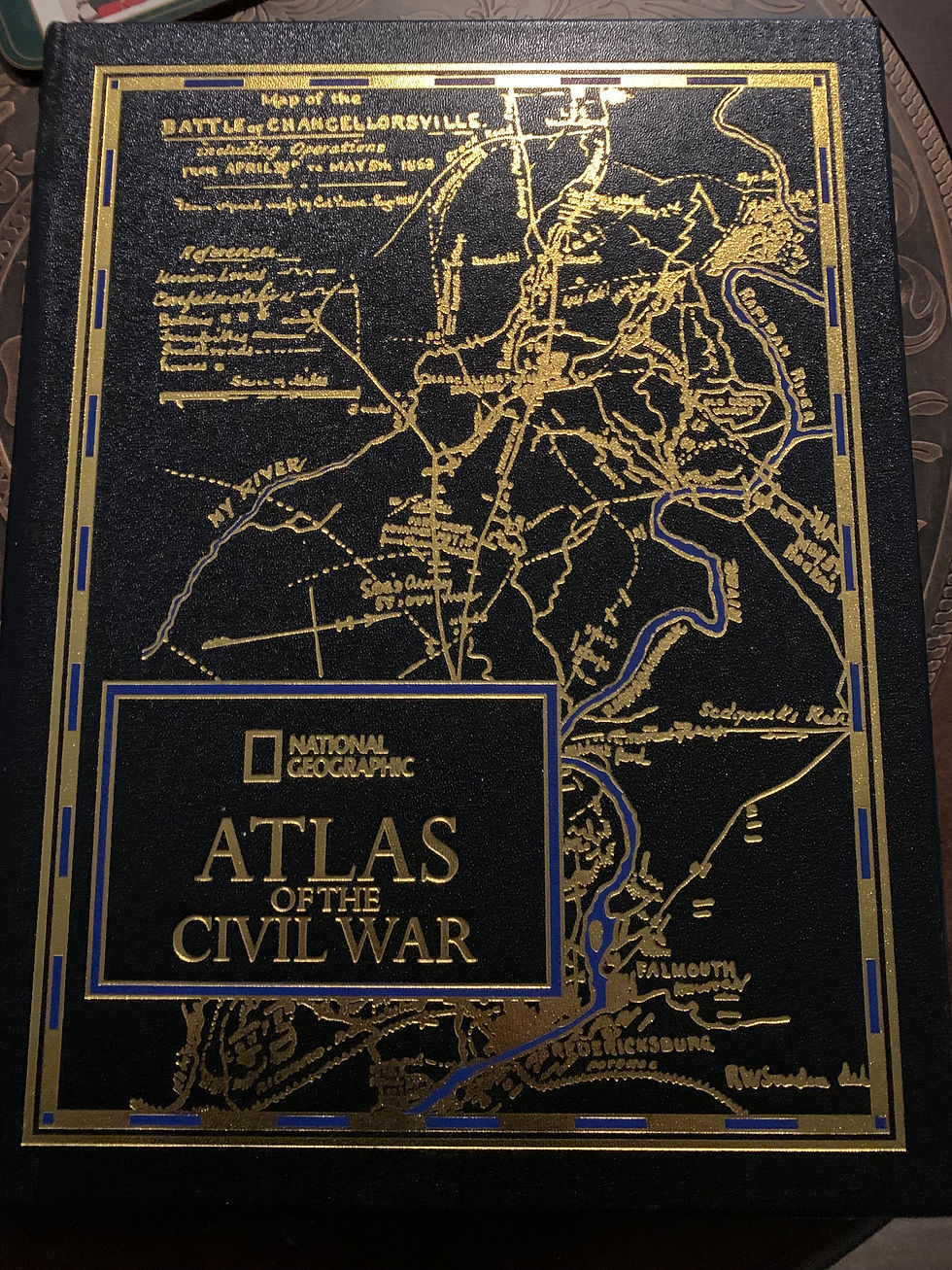
I haven't read a whole lot about the Civil War. Including just a book or two, including The Red Badge of Courage, my reading of the time period has been rather sparse. The war was brutal in its execution. Both sides fought fervently and it pitted families against themselves. The book weaves in accounts from soldiers and from civilians that were involved at the time; a nice touch that keeps the narrative flowing and hits home as grounded in historical reality.
One of the stories from a soldier's perspective was about David Farragut, a man who had served in the Navy since he was 9 years old and, fifty years later, was instrumental in the battle for New Orleans. He had reportedly told his wife that "I have now attained what I have been looking for all of my life - a flag - and having attained it, all that is necessary to complete the scene is a victory.'

Another poignant story that has not been and will likely never be told is about a framed photograph found between a Federalist and Confederate corpse in the aftermath of a battle. The subject of the photograph and who had been carrying it is unknown.

On the map making front, there are some incredible specimens reproduced in this book. One, pictured below, was carried by Stonewall Jackson himself and was about eight feet long. It is extremely detailed and clearly was used to help inform Jackson's decisions. Remarkable.

I highly recommend this book to anyone interested in the Civil War. It gives a good overview of how the conflict unfolded and some of the details about the people impacted that have surfaced over time. There's an abundance of photographs contemporary to the time as well as photos of artifacts, including an image of Abraham Lincoln's hat which was worn on the day of his assassination.


Comments